
INSTRUCTION MANUAL
Fireman FR balaclava
Use, cleaning, care and maintenance of your garment.
Garment certificate
The CA number is on the garment label.
- Composition
- 100% cotton
- Fabric weight
- 240 g/m²
- ATPV
- 15 cal/cm²
- Validity stated in the PDF
- 16/12/2030
Single layer
Protects the user's skull and neck against thermal agents from electric arc.
Protection limits. PPE NOT APPROVED FOR PROTECTION AGAINST FLASH FIRE HAZARDS.
Description and source of the data
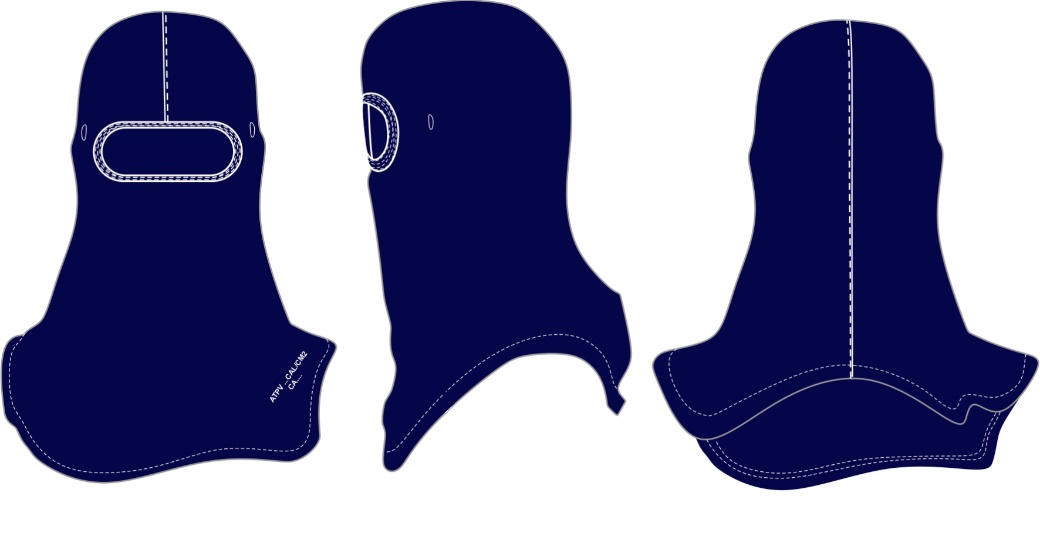
Safety balaclava for protection against the effects of electric arc, made from one layer of Fireman flame-resistant knit, 100% cotton, ATPV 15 cal/cm², nominal weight 240 g/m², manufactured by Yancheng Labon Technical Fiber Co. Ltd.
Transcript of this CA’s instruction manual · reviewed on October 1, 2026. The printed validity does not replace checking the current status at CAEPI.
The manual is the primary source for this edition. The certificate below keeps the original content, including any documentary differences.
See the full source ↗INSTRUCTION MANUAL FOR BALACLAVA-TYPE GARMENTS FOR PROTECTION AGAINST ELECTRIC ARC
Reference: balaclava for protection against the effects of electric arc - CSW 1000.
CA: 45.749
01Manufactured and sold by
+
Commanders Industrie e Comércio de confecções Ltda
Avenida Governador Roberto da Silveira, 751 – Vila São Carlos – Apucarana – PR – Postal code 86800-520
CNPJ Head office 01.699.525/0001-20
CNPJ Branch 01.699.525/0003-91
CNPJ Branch 01.699.525/0004-72
CNPJ Branch 01.699.525/0002-00
02Product designation (full description)
+
Reference: protective garment, cap/balaclava type CSW-1000
CA: 45.749
Safety balaclava for protection against the effects of electric arc, made from one layer of Fireman flame-resistant knit, 100% cotton, ATPV 15 cal/cm², nominal weight 240 g/m², manufactured by Yancheng Labon Technical Fiber Co. Ltd.
03ABNT NBR test standard number
+
ASTM F 2621:2022
ASTM F 1959:2022
04Pictograms and ATPV value
+
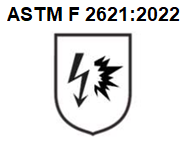
- Pictogram for the electric arc test standard:
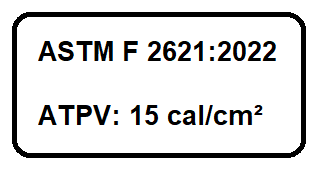
- Indicates the test standard used and the result obtained
05Sizing information
+
Safety garments must always be worn as a set of protective pants and shirt, or a coverall, with the balaclava protecting the skull and neck. All of them must have been tested, provide the protection the job's risk requires against electric arc and/or flash fire, and have the protection level the user wants for the risk they will be exposed to.
Significant overlap must be ensured for a two-piece system (e.g. balaclava over or under the shirt; the shirt must be worn tucked inside the pants with an overlap that allows mobility without leaving any body part exposed); the user must wear the correct garment size and fit, and the overlap must be maintained in every movement and position.
The right size can be found by measuring the head circumference and matching it to the ideal size on the label. Balaclavas are usually supplied in one size.
06Information for the user on environmental conditions and that workplace risks must be
+
considered.
Environmental conditions and workplace risks must be taken into account.
Conditions such as higher energy levels and longer exposure times than the test parameters may lead to more serious injuries. For complete personal protection, additional suitable protective equipment is also required, such as a safety helmet/visor, protective gloves, etc.
Under no circumstances may other clothing with fibers that can melt, e.g. polyamide, polyester or acrylic, be worn under the garment, as it can cause burns. For garment systems tested as a set (for example, a shirt with a jacket worn over it), the degree of protection is guaranteed only for combinations in which the body is fully covered, for example in combination with certified pants of the same protection level.
The user must make sure that:
• No metal parts are in pockets or attached to the garment (unsuitable tools or even personal accessories)
• Sleeve and pant-leg closures are always fastened for a perfect fit
Rolling up sleeves and pant legs is not allowed.
• Metal parts must be fully covered
• With pockets without flaps, any work equipment carried (for example, tools) can be a hazard to the worker and therefore must not be left in the pocket when working with electricity.
07Information for the user that deviations from the standard's parameters may result in more severe conditions
+
For correct use and effective protection, work areas must be assessed for the risk present in that environment.
The garments must fully cover the risk. For example, if an area presents an incident energy risk equal to or below 7.9 cal/cm², the garment used must cover risk 2, or be equal to or above 8.0 cal/cm²
If the garment is undersized for the hazard, in the event of an accident the wearer risks severe burns, putting their life at high risk.
08Information for the user that the garment must always be worn fully closed
+
For correct protection, the garments must be worn covering the whole body. The upper placket closures (buttons, zipper or touch fasteners) and the upper-limb cuffs (buttons or touch fasteners) must be fully fastened.
Under no circumstances may the garments be worn with sleeves or legs rolled up.
In pants-and-shirt combinations, the shirt must overlap tucked inside the pants.
PS: it is very important to combine the garments above with gloves, helmet, balaclava, glasses or a face shield tested for electric arc protection.
09Information for the user that the FR garment does not protect against electric shock, as it is not made of electrically insulating material
+
The protective garment presented here is not insulating protective clothing and does not protect against accidental contact with live (energized) parts.
10Information for the user that if the garment is contaminated with flammable material it must not be used
+
The garment will not provide protection if contaminated with flammable or highly flammable substances such as grease, oils, fuels or even flammable wood sap.
In case of this kind of contamination, the garment must be replaced promptly and cleaned until the flammable material is completely removed. The risk is extremely high and may lead to serious burns or even death in an accident.
If this material cannot be removed, the garment must be discarded.
11Information for the user that the garment must be cleaned when needed
+
The garment's functionality may be impaired or reduced if it is dirty. Ideally, wash protective garments frequently. We suggest washing after each use.
Washing does not reduce protection, and there is no limit to the number of times the garment can be washed.
12Information for the user that a damaged garment (for example, with holes or a damaged zipper or hook-and-loop) must not be used
+
The garment's functionality may be impaired or reduced by a wide range of factors, for example wear and significant mechanical stress on the garment (abrasion, crawling, etc.).
Always perform a visual inspection; if you find signs of abrasion, thinning, tears, holes, etc., discard the garment, as it will not provide the protection the user needs to carry out hazardous activities.
During this inspection, check that closures such as buttons, zippers or touch fasteners work. If they have problems, the garment must be discarded.
13Information for the user on the protection level
+
ATPV = 15 cal/cm²
HAF = 85.99%
14Information for the user if any part of the garment is made of non-flame-resistant material, for example through a drawing of the garment showing its location and size.
+
Not applicable
15Information for the user: for full-body protection, protective clothing must be worn
+
fully closed together with other suitable protective equipment (helmet with
face protection, gloves and footwear (boots)
For correct protection, the garments must be worn covering the whole body. The upper placket closures (buttons, zipper or touch fasteners) and the upper-limb cuffs (buttons or touch fasteners) must be fully fastened.
Under no circumstances may the garments be worn with sleeves or legs rolled up.
In balaclava, pants and shirt combinations, the shirt must be tucked inside the pants and the balaclava worn over or under the top of the shirt.
PS: it is very important to combine the garments above with gloves, helmet, balaclava, glasses or a face shield tested for electric arc protection.
16Information for the user that an FR garment worn while soiled, even if not
+
flammable may reduce the level of protection
The garment's functionality may be impaired and reduced in case of excessive dirt, even if it is not flammable.
We recommend cleaning after each use.
Under no circumstances may other clothing with fibers that can melt or that is not flame retardant (for example: polyamide, polyester, acrylic) be worn under the garment.
17Care instructions according to ISO 3758 and/or ISO 30023
+
Follow the washing instructions on the garment label. Below is an index of the symbols:
ISO 3758 – Guidance for home washing
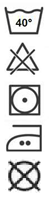
Do not use chlorine-based bleach or whiteners
A tumble dryer may be used at the lowest temperature
The fabric may be ironed at a maximum of 150 °C (ironing the tapes is not allowed
tape)
Do not dry clean
ISO 30023 – Guidance for industrial laundering
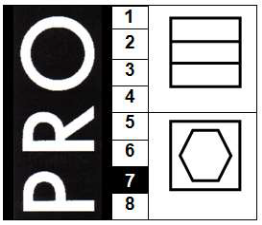
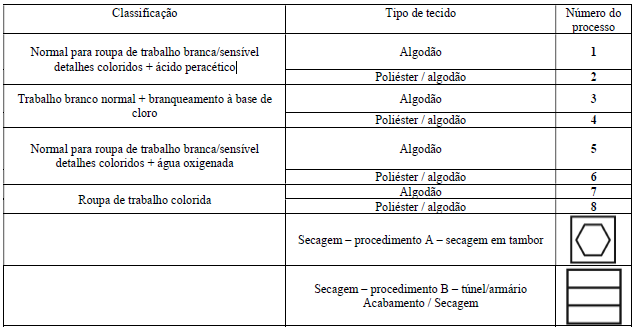
18Information for the user that the garment must be stored in a dry, clean place and not
+
must be exposed to intense light
Service life depends on how the products are used, cared for and stored, etc.
• Garments must be transported and stored at normal room temperature (ideally in a ventilated, clean and dry place).
• Protect the garment from ultraviolet light.
• Even in storage, observe the PPE expiry date, which is 5 years after the manufacturing date.
19Cleaning and repair instructions
+
• Follow the washing instructions on the protective garment's label.
• Reflective tapes must not be ironed (the reflective part is made of glued glass microspheres; heat or steam from the iron makes them come off).
• We recommend home washing because it is less aggressive.
• Do not use bleach, whitening agents of any kind or starch, and do not treat the garment with strongly oxidizing agents.
• Wash white fabrics separately from colored ones; do not handle them with other materials that may cause significant staining.
• Wash flame-resistant garments separately.
• Avoid over-drying the garment. It must always retain enough residual moisture to prevent excessive shrinkage
• You may iron at the temperature stated on the garment label.
• Do not overload the washing machine. An excessive load may subject the garment to greater
wear, spoil its appearance and prevent proper cleaning.
• No detergent or auxiliary cleaning product may remain in the garment after rinsing.
warning: if this instruction is not followed, the protective effect may be impaired.
• Wash garments inside out and do not pack them while damp or wet.
• Exposure to extreme heat may cause temporary, partial changes in fabric colors.
• Do not try to mend garments with holes or tears; a repair, even with flame-resistant thread and fabric, does not provide the same level of protection as the garment.
• Do not use self-adhesive or iron-on fabric patches for repairs; they do not provide the same level of protection as the garment.
20Presence of allergenic components
+
These garments pose no allergy risk to the user.
21How to put it on
+
Balaclava: put it on over the head, adjusting it until it covers the whole skull and part of the shirt, and adjust the eye opening so it does not obstruct the field of vision. The balaclava has side openings to fit safety glasses.
22Disposal guidelines
+
At the end of their service life, whether because they have expired or are damaged, the garments may be disposed of as solid waste; we recommend sending them to a recycling cooperative that can forward the product to textile recycling facilities in your region, or to a properly certified sanitary landfill.
23Accessory references
+
Not applicable.
24Compatibility with other PPE
+
For correct protection, electric arc protective garments must always be used together with:
- Torso and upper-limb protection
- Lower-limb protection
- Head, neck and face protection
- Hand protection
- Foot protection
In addition, other risks must be assessed, such as work at height or in rainy weather. In these cases, the selected PPE must also be flame resistant. PPE that, when exposed to fire, ignites, is not compatible with these garments.
(Definition of ignite: to catch fire; to burn; to turn into fire.)