
INSTRUCTION MANUAL
Hood with visor
Hood with visor · Júpiter FR · multilayer
Garment certificate
The CA number is on the garment label.
- ATPV
- 44,0 cal/cm²
- Validity stated in the PDF
- 27/07/2031
Layer by layer
Multicamadas
Protects the user's eyes and face against flying particle impacts and against ultraviolet rays (u6), infrared (r7) and intense light (l2), and protects the user's eyes, face, skull and neck against thermal agents from electric arc.
Protection limits. PPE NOT APPROVED FOR PROTECTION AGAINST FLASH FIRE HAZARDS.
Description and source of the data
Safety hood with visor for use with a helmet, made as an executioner-style hood in three layers of Júpiter FR fabric, 88% cotton and 12% polyamide, nominal weight 7.7 oz/yd² (260 g/m²) per layer, manufactured by Cedro Têxtil. ATPV 44.0 cal/cm². The hood is combined with a face shield made of double grey polycarbonate, 8 mm total thickness, and must be used together with safety helmet CA no. 12.389 (helmet manufacturer: Ultra Master Plug Comércio e Indústria de Equipamentos de Proteção Individual Ltda). The hood has a front opening with side edges covered in Velcro to attach it to the face shield, which is fixed to an arch-shaped plastic bracket resting on the helmet brim. The face shield is attached to the plastic bracket with four plastic pins, and this bracket is fixed to a tilting device held by a strap around the helmet shell.
Transcript of this CA’s instruction manual · reviewed on October 1, 2026. The printed validity does not replace checking the current status at CAEPI.
The manual is the primary source for this edition. The certificate below keeps the original content, including any documentary differences.
See the full source ↗INSTRUCTION MANUAL FOR EXECUTIONER-STYLE HOOD FOR PROTECTION AGAINST ELECTRIC ARC
Reference: executioner-style hood combined with visor for skull, face and neck protection against the effects of electric arc – CSW-115
CA: 46.911
01Manufactured and sold by
+
Commanders Industrie e Comércio de confecções Ltda
Avenida Governador Roberto da Silveira, 751 – Vila São Carlos – Apucarana – PR – Postal code 86800-520
CNPJ Head office 01.699.525/0001-20
CNPJ Branch 01.699.525/0003-91
CNPJ Branch 01.699.525/0004-72
CNPJ Branch 01.699.525/0002-00
02Product designation (full description)
+
Reference: executioner-style hood combined with visor – CSW-115
CA: 46.911
Safety hood with visor for use with a helmet, consisting of an executioner-style hood made from three layers of Júpiter FR fabric, 88% cotton and 12% polyamide, nominal weight 7.7 oz/yd² (260 g/m²) per layer, manufactured by Cedro Têxtil. ATPV 44.0 cal/cm². The hood is combined with a face shield made of double light-gray polycarbonate with a total thickness of 8 mm, and must be used together with safety helmet CA no. 12.389 (helmet manufacturer: Ultra Master Plug Comércio e Indústria de Equipamentos de Proteção Individual Ltda). The hood has a front opening whose side edges are covered with hook-and-loop for attaching the face shield, which is fixed to an arc-shaped plastic holder resting on the helmet brim. The face shield is attached to the plastic holder with four plastic pins, and this holder is fixed to a pivoting device strapped around the helmet shell.
Colors: dark blue hood and light gray visor.
03ASTM test standard number
+
ASTM F 1959 performed at the IEE USP laboratory
ASTM F 2178 performed at the IEE USP laboratory
ANSI/ISEA Z87.1
04Pictograms and ATPV value
+
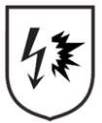
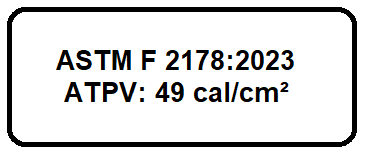
05Sizing information
+
Safety garments must always be worn as a set of a hood with face protection plus protective pants and shirt, or a coverall, that have been tested, that provide the protection the job's risk requires against electric arc and/or flash fire, and that have the protection level the user wants for the risk they will be exposed to.
Significant overlap must be ensured for a two-piece system (e.g. pants and shirt: the shirt must be worn tucked inside the pants with an overlap that allows mobility without leaving any body part exposed); the user must wear the correct garment size and fit, and the overlap must be maintained in every movement and position.
06Information for the user on environmental conditions and that workplace risks must be taken into account.
+
Environmental conditions and workplace risks must be taken into account.
Conditions such as higher energy levels and longer exposure times than the test parameters may lead to more serious injuries. For complete personal protection, additional suitable protective equipment is also required, such as a safety helmet/visor, protective gloves, etc.
Under no circumstances may other fabrics with fibers that can melt, e.g. polyamide, polyester or acrylic, be worn under the hood, as they can cause burns.
• Metal parts must be fully covered
07Information for the user that deviations from the standard's parameters may result in more severe conditions
+
For correct use and effective protection, work areas must be assessed for the risk present in that environment.
The hood must fully cover the risk. For example, if an area presents an incident energy risk equal to or below 40 cal/cm², the hood used must cover this risk with an equal or higher value (e.g. 41 cal/cm²).
If the hood is undersized for the hazard, in the event of an accident the user risks severe burns, putting their life at high risk.
08Information for the user that the hood must be used correctly
+
For correct protection, the hood must be worn properly, with the helmet fitted on the head and the fabric overlapping the torso garment down to about the chest.
The visor must be correctly attached to the fabric's hook-and-loop strip, leaving no gaps through which incident energy can enter.
PS: it is very important to combine this hood with garments suited to the hazard and with gloves tested for electric arc protection.
09Information for the user that the FR hood does not protect against electric shock, as it is not made of electrically insulating material
+
The protective hood presented here is not an insulating protective accessory and does not protect against accidental contact with live (energized) parts.
10Information for the user that if the hood is contaminated with flammable material it must not be used
+
The hood will not provide protection if contaminated with flammable or highly flammable substances such as grease, oils, fuels or even flammable wood sap.
In case of this kind of contamination, the hood must be replaced promptly and cleaned until the flammable material is completely removed. The risk is extremely high and may lead to serious burns or even death in an accident.
If this material cannot be removed, the hood must be discarded.
11Information for the user that the hood must be cleaned when needed
+
The hood's functionality may be impaired or reduced if the garment is dirty. Ideally, wash the protective hood fabric frequently.
Washing does not reduce protection, and there is no limit to the number of times the garment can be washed.
The lens must be cleaned with a soft, slightly damp cotton cloth.
12Information for the user that a damaged hood (for example, with holes) must not be used
+
The hood's functionality may be impaired or reduced by a wide range of factors, for example wear and significant mechanical stress on the garment (abrasion, crawling, etc.).
Always perform a visual inspection; if you find signs of abrasion, thinning, tears, holes, etc., discard the hood, as it will not provide the protection the user needs to carry out hazardous activities.
.
13Information for the user on the protection level
+
Tested to ASTM F 2178
ATPV 44 cal/cm²
ANSI/ISEA Z87.1
Z87+U6L2R7
14Information for the user if any part of the hood is made of non-flame-resistant material.
+
Not applicable
15Information for the user that an FR hood used while soiled, even if not
+
flammable may reduce the level of protection
Functionality may be impaired and reduced in case of excessive dirt, even if it is not flammable.
We recommend cleaning after each use.
16Cleaning instructions
+
This protective equipment combines 3 (three) accessories – a safety helmet, a polycarbonate lens with holder, and a flame-retardant fabric hood.
Clean each accessory separately, following its own instructions, as follows
Cleaning the hood
Use a neutral detergent;
Maximum washing temperature 60 °C;
Do not bleach or use chlorinated products for cleaning;
Tumble drying is allowed up to a maximum of 65 °C;
May be ironed hot up to a limit of 150 °C;
Dry cleaning is allowed.
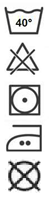
Do not use chlorine-based bleach or whiteners
A tumble dryer may be used at the lowest temperature
The fabric may be ironed at a maximum of 150 °C (ironing the tapes is not allowed
tape)
Do not dry clean
Cleaning the helmet
Wash with soap and water, taking care with the straps and foam;
Rinse;
Dry with a soft cloth or chamois. Foam parts should preferably be line-dried;
Cleaning the lens and holder
Wash with neutral detergent and water, but do not use a sponge or other abrasive material.
Rinse
Dry with a soft cloth or chamois.
17Information for the user that the hood must be transported and stored in a dry, clean place and must not be exposed to intense light
+
Service life depends on how the products are used, cared for and stored, etc.
• The hood must be transported and stored at normal room temperature (ideally in a ventilated, clean and dry place).
• Protect from ultraviolet light.
• the risk lens.
• Even in storage, observe the PPE expiry date, which is 5 years after the manufacturing date.
18Presence of allergenic components
+
These garments pose no allergy risk to the user.
19How to put it on
+
Before use it must be adjusted, especially the hood-to-lens fit via the hook-and-loop, to prevent heat from passing through in the event of an electric arc;
After adjustment, put the hood on over the head and adjust the helmet so that it is comfortable to wear. The hood must be adjusted to cover the back and chest;
To remove the hood, the user should pull it off from the top, hold it by the sides, or have another person pull it by the device above it;
20Important
+
This face shield does not offer unlimited protection against particles and splashes projected against it.
This device must be used with one of the following additional eye protection devices:
A. Safety glasses where there are impact risks.
B. Suitable goggles or safety glasses where there is a harmful radiation risk (ultraviolet, infrared, etc.)
C. Suitable goggles where there are chemical risks.
21Disposal guidelines
+
At the end of its service life, whether because it has expired or is damaged, this hood assembly may be disposed of as solid waste; we recommend sending it to a recycling cooperative that can forward the product to textile recycling facilities in your region, or to a properly certified sanitary landfill.
22Accessory references
+
Not applicable.
23Compatibility with other PPE
+
For correct protection, the electric arc protective hood must always be used together with:
- Torso and upper-limb protection
- Lower-limb protection
- Hand protection
- Foot protection
In addition, other risks must be assessed, such as work at height or in rainy weather. In these cases, the selected PPE must also be flame resistant. PPE that, when exposed to fire, ignites, is not compatible with these garments.
(Definition of ignite: to catch fire; to burn; to turn into fire.)